Asset Actions Setup
Setup the various actions that can occur against an Asset for Asset item
To set an action against an asset go to
Asset Tracker Module> Configuration> Asset Action
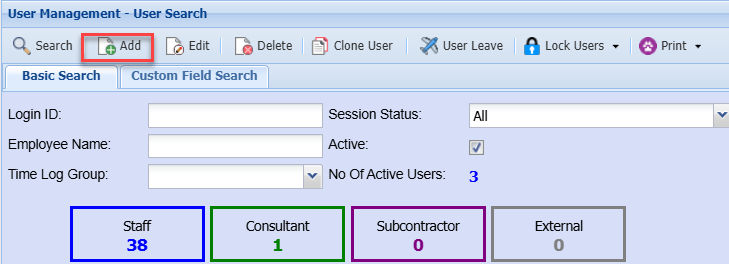
Then click add and the screen below will appear. To edit an asset action, highlight the asset action you want to edit then click edit
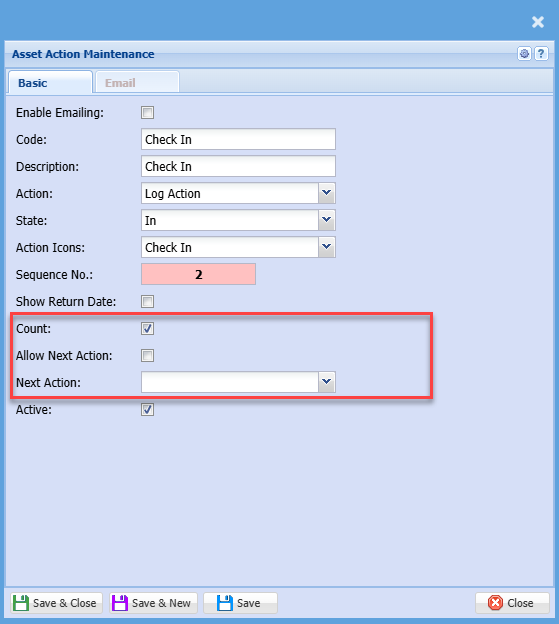
| Enable Emailing | Put a tick on to enable emailing |
| Code | Enter a code for the action |
| Description | Enter a description for the action |
| Action | Various actions can be done on an asset, log action, invoice, credit note, checklist, support log |
| State | There are four states to which an asset can be assigned, in, pending all, out and Disposed |
| Action icons | Set up an icon for the action |
| Sequence No | This is the sort order for the action drop down (You may want more frequently used actions at the top of the list) |
| Show return date |
|
| Count | Put a tick on if you want the system to automatically count your assets |
| Allow Next Action | Put this tick on to allow next action |
| Next Action | Select the next action on the drop down menu selection |
| Active | Put a tick if it is an active action, and do not put a tick if it is inactive |
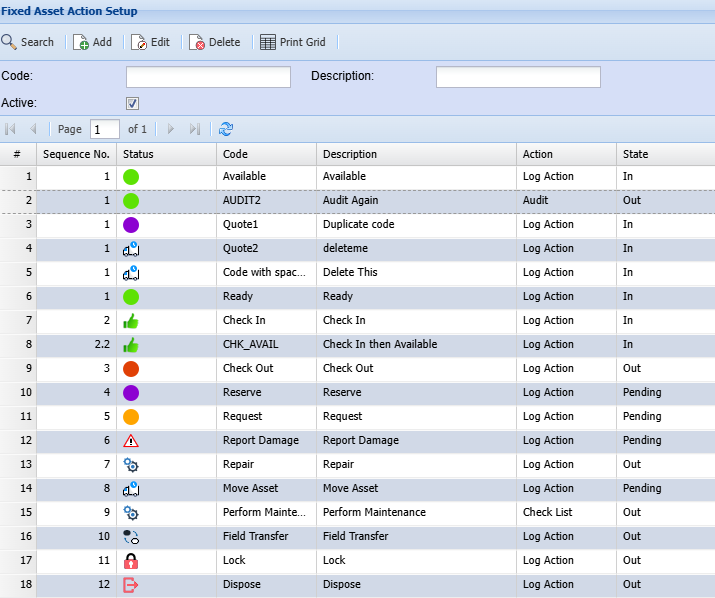
Asset Action Grid
Go through the various actions and clean up the actions that you will not be using
We recommend the following actions remain in the system:
- Available
- Check-In
- Check Out
- Dispose (Works when you write off the asset and creates a stock level adjustment)
- Sell (This works when you sell the asset and create an invoice)
- Audit (Users this when you create your fixed asset audit, it will mark the items as being audited)
- Bookin (Works with booking in feature in job costing)
- .Bookout (Works with booking out feature in job costing)