
Asset Tracker Module map

The Asset Tracker Module provides a comprehensive solution for recording, monitoring, and managing organisational assets throughout their lifecycle. It enables businesses to maintain accurate asset records, track asset locations and assignments, schedule maintenance activities, manage incidents, store supporting documentation, and produce detailed reports. By centralising asset information in a single system, the module helps improve asset visibility, accountability, compliance, and operational efficiency while ensuring critical assets are properly maintained and controlled.
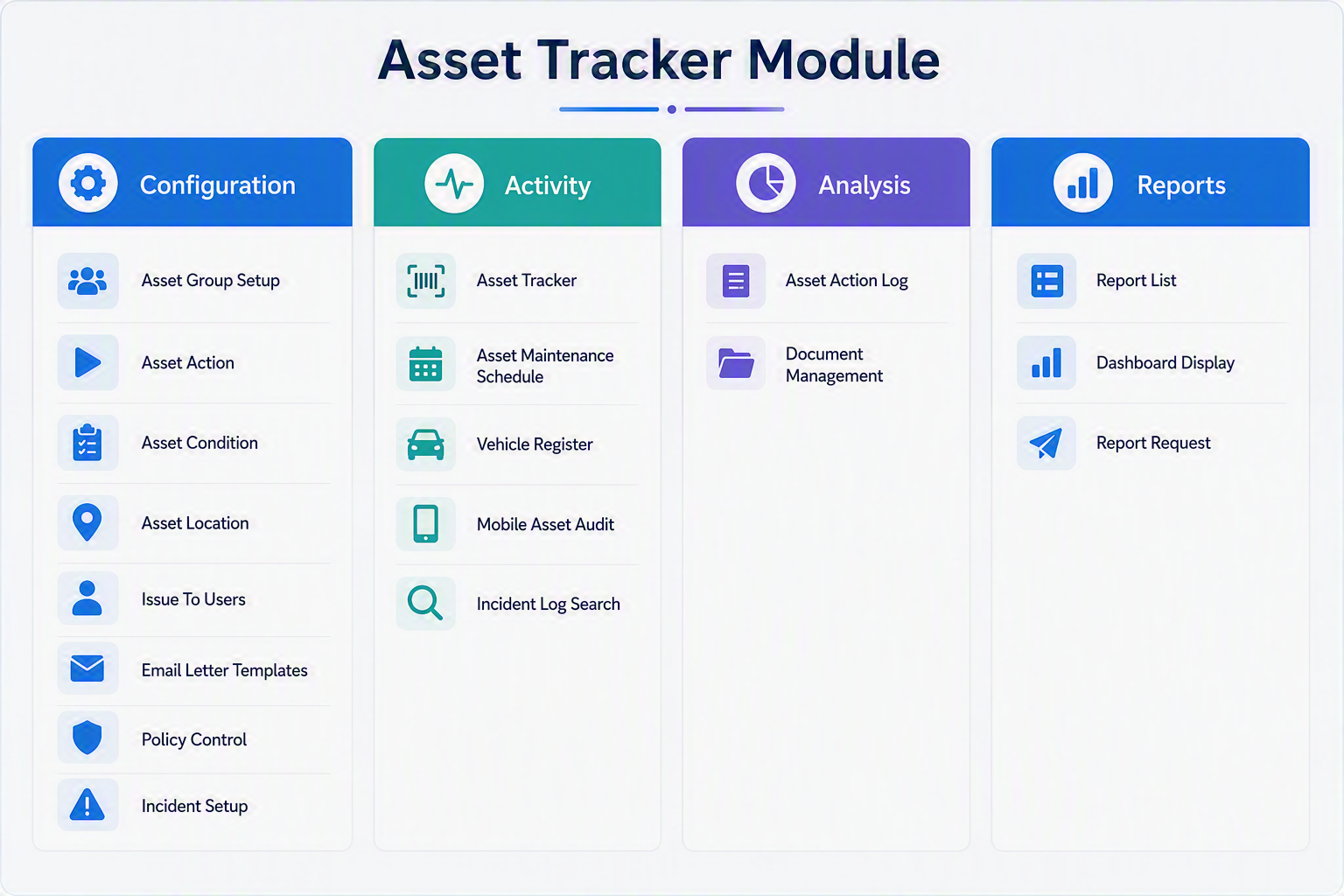
Asset Tracker Module.png


Asset Tracker Module Menu Items

Configuration
Menu Item Explanation
Asset Group Setup Used to create and maintain asset groups so assets can be organised into logical categories, such as vehicles, equipment, tools, plant, or other asset types.
Asset Action Used to define the different actions that can be recorded against an asset, such as service, repair, inspection, issue, return, or replacement.
Asset Condition Used to set up condition statuses for assets, allowing users to record whether an asset is new, good, damaged, under repair, retired, or unavailable.
Asset Location Used to maintain the locations where assets are stored, used, or assigned. This helps track where each asset is currently located.
Issue To Users Used to set up or manage the users or staff members to whom assets can be issued. This supports accountability and asset control.
Email Letter Templates Used to maintain standard email or letter templates for asset-related communication, such as issue notices, reminders, or policy acknowledgements.
Policy Control Used to manage policy-related settings for assets, helping ensure users follow the required asset usage, safety, or compliance rules.
Incident Setup Used to configure incident types or incident settings so asset-related incidents can be recorded consistently throughout the system.
Activity
Menu Item Explanation
Asset Tracker Used to maintain and view asset records, including key asset details, ownership, location, condition, and tracking information.
Asset Maintenance Schedule Used to record and manage scheduled maintenance tasks for assets, helping ensure services, inspections, and repairs are planned and followed up.
Vehicle Register Used to maintain vehicle-related asset records, including registration details, vehicle information, and associated tracking data.
Mobile Asset Audit Used to support asset audits, allowing assets to be checked, verified, and updated during an audit process, especially where mobile checking is required.
Incident Log Search Used to search and review asset-related incidents that have been logged in the system. This helps users investigate issues and track historical events.
Analysis
Menu Item Explanation
Asset Action Log Used to review the history of actions recorded against assets, such as maintenance, repairs, inspections, movements, or user assignments.
Document Management Used to store, manage, and access documents linked to assets, such as service records, warranties, manuals, inspection reports, or compliance documents.
Reports
Menu Item Explanation
Report List Used to access the available Asset Tracker reports within the module.
Dashboard Display Used to view dashboard-style information or visual summaries relating to assets, asset activity, or asset status.
Report Request Used to request, generate, or run specific asset-related reports based on the information required by the user.


Asset Tracker

The Asset Tracker Module in Huge ERP provides a central area for managing business assets, including asset setup, tracking, maintenance, incidents, documentation, and reporting. The module is divided into four menu groups: Configuration, Activity, Analysis, and Reports. Configuration is used to set up the supporting information required for asset control, Activity is used for day-to-day asset management, Analysis provides access to asset logs and supporting documents, and Reports allows users to review asset information through lists, dashboards, and report requests.
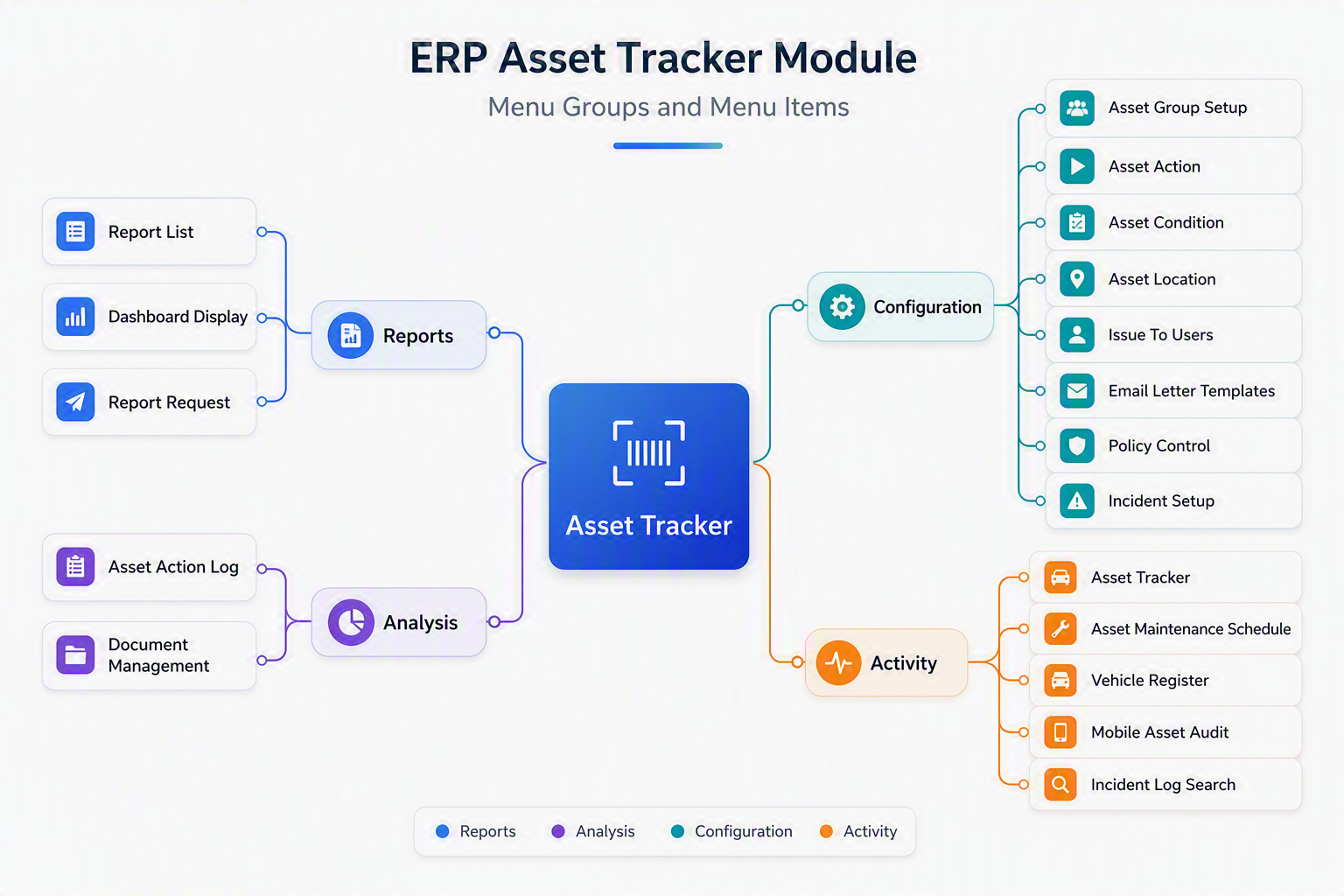
Asset Tracker map.png