Manage Job Screen Explained
Views Button

ViewsOverview ButtonView
This screen provides a comprehensive overview of all current and future jobs, allowing you to monitor progress, track statuses, and manage workload across teams.
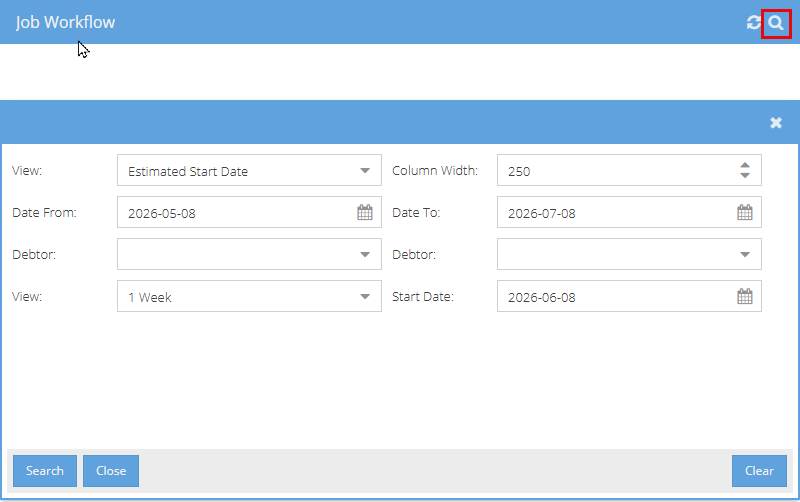
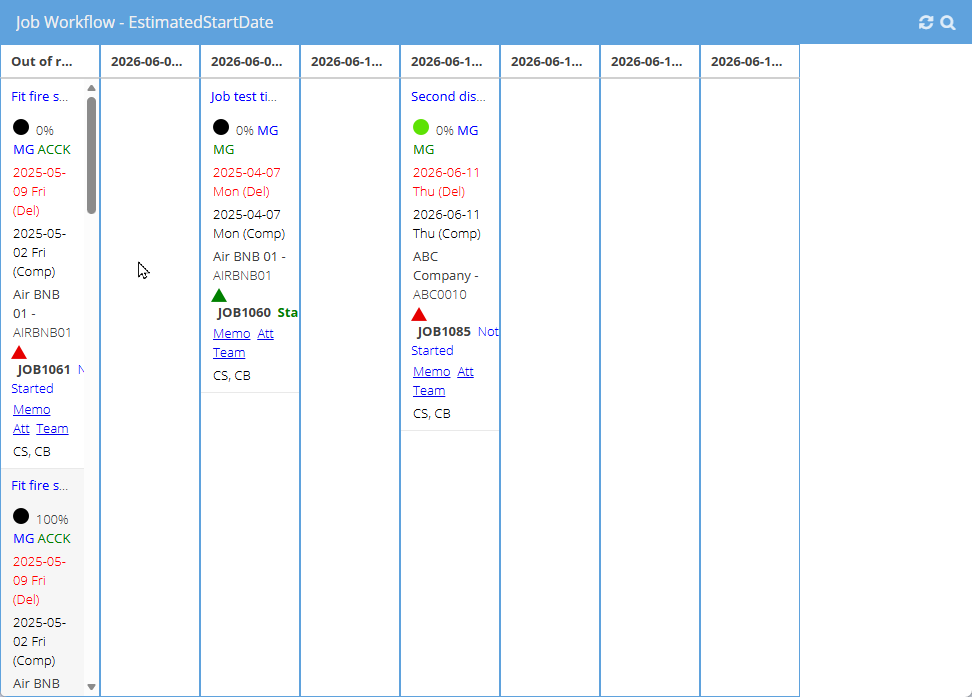
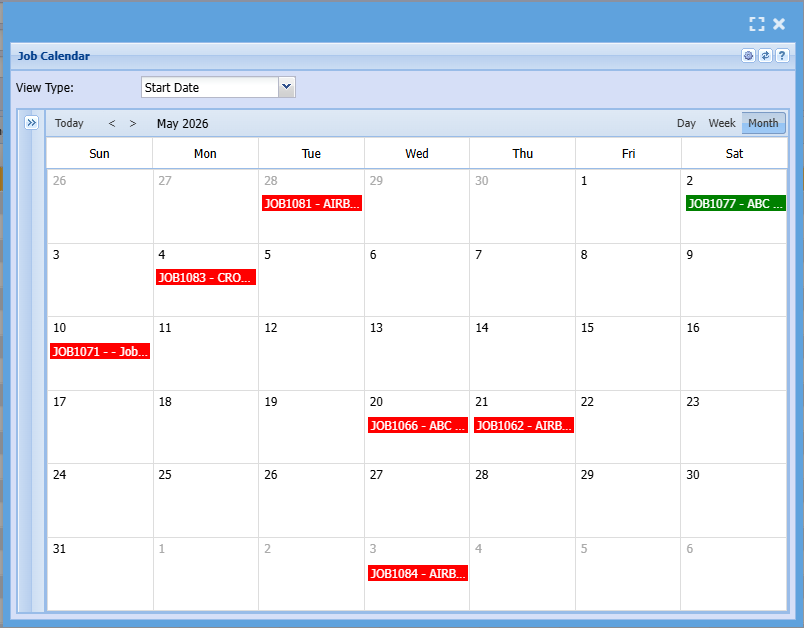
This screen is used to plan and manage team workloads across jobs and dates. It provides a visual schedule that helps you track where each job sits and how teams are allocated over time.
Key Features
Team-Based Scheduling
OpenEach row represents a team (e.g. Team 1, Team 2, etc.).- Jobs are assigned to teams and displayed as coloured bars across the
Ganttcalendar.
Timeline JobView
- The
“From”griddateis organised by days and weeks, allowing you to see:- When jobs are scheduled
- How long each job will
alwaystake - Any overlaps or gaps in scheduling
default
Drag-and-Drop Functionality
- Jobs can be easily moved between teams or dates by dragging and dropping.
- This allows you to:
- Adjust schedules if a job is running behind or ahead
- Reallocate work between teams to
todaybalanceand display forward-looking information.capacity ByQuicklydefault,respondthetosystemchangesshowsintask activities that are eitherNot Startedproduction or priorities
Visual Job Tracking
- Each job is shown as a labelled block (e.g.
InROOFINGProgress– JOB1083). - The
zoomlengthfunctionof the block represents the duration of the task. - Colours help visually distinguish between jobs or job types.
This screen is typically used by planners or managers to:
- Allocate jobs to specific teams
- Monitor daily and weekly workloads
- Adjust schedules in real time
- Keep production aligned with deadlines
Calendar View
Gantt View
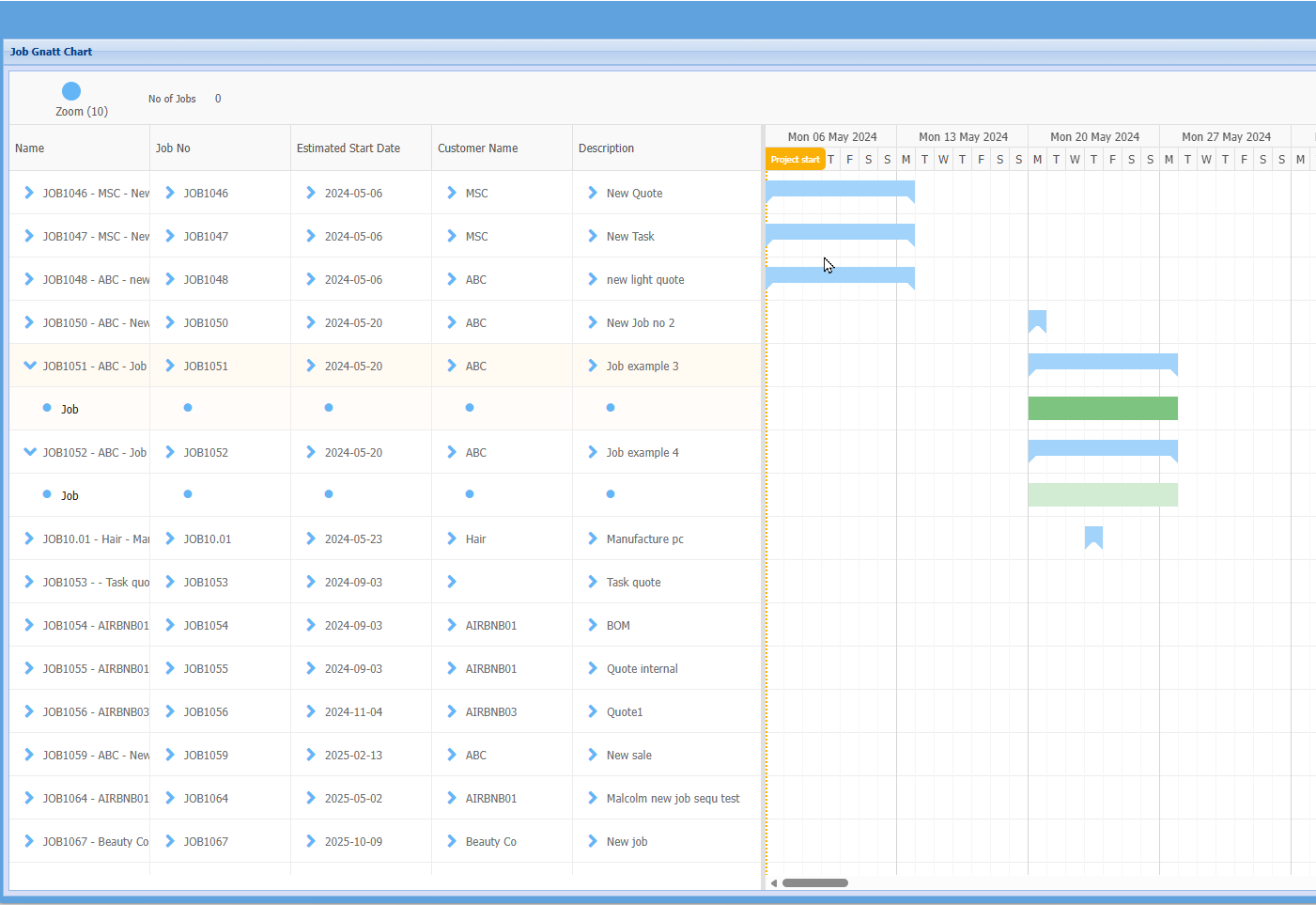
This screen provides a timeline view of current and future jobs, helping you track when jobs are planned to start and how they are spread over time.
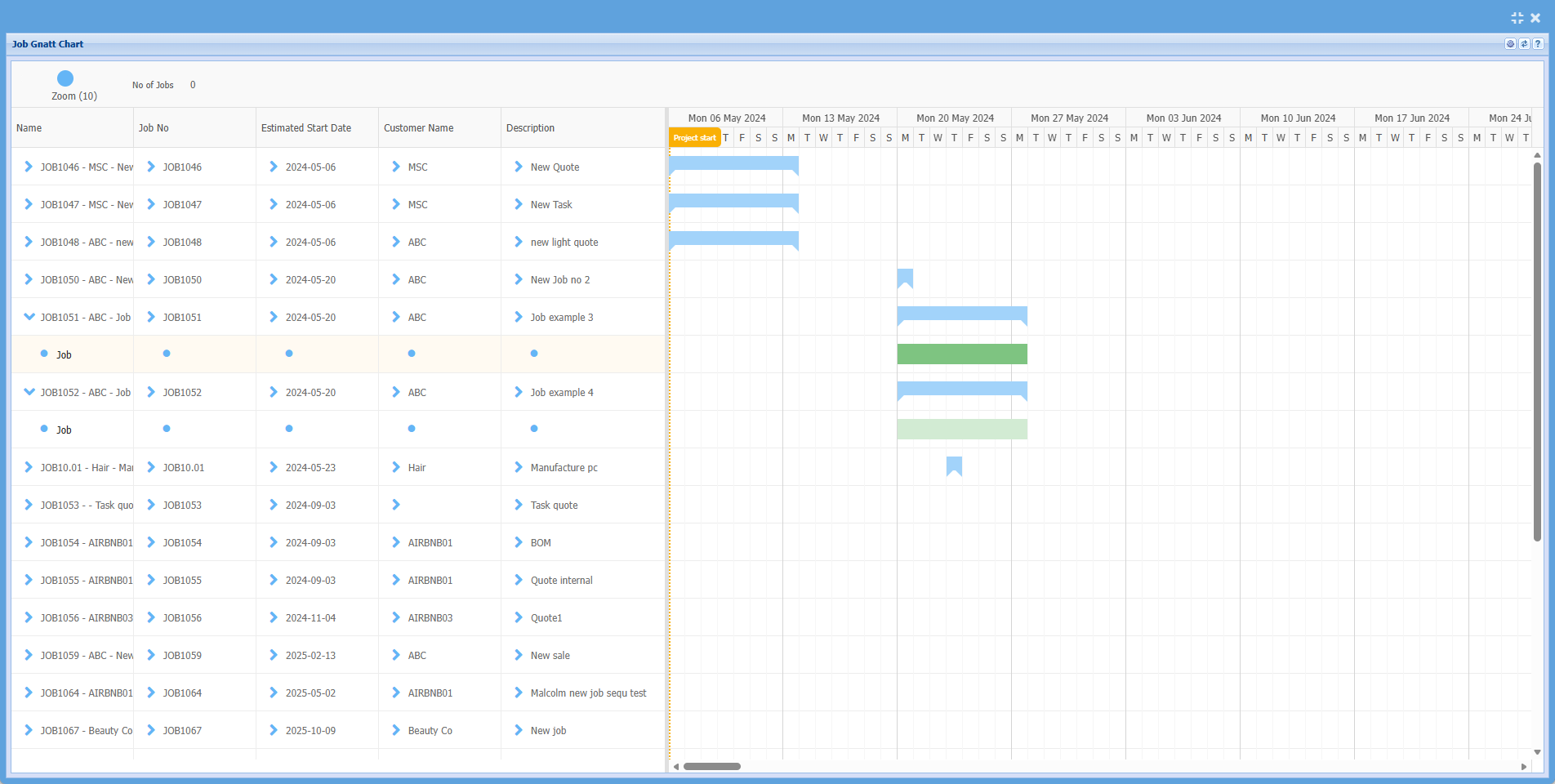
Left Panel – Job Details
Each row represents a job, with key information including:
- Name – Job number and short description
- Job No – Unique job reference
- Estimated Start Date – When the job is scheduled to begin
- Customer Name – Who the job is for
- Description – Summary of the work
Right Panel – Timeline (Gantt View)
-
Displays jobs visually across a calendar timeline (by month/quarter)
-
Each job is shown as a blue bar
-
The position of the bar shows:
- When the job is scheduled
- How long the job is expected to run
-
The “Project Start” marker highlights the beginning of the selected timeline period
Key Features
- Visual Planning
- Quickly see current jobs vs upcoming jobs
- Identify gaps, overlaps, or busy periods
- Timeline Scaling
- The Zoom slider allows you to adjust how much detail is shown (more detail or broader view)
- Job Tracking
- Easily monitor:
- Jobs starting soon
- Jobs scheduled later in the
calendaryear - Workload
fromdistribution over time
view,
- Clicking a
high-leveljoboverview to a more detailed timeframe. The most effective viewing levels are zoom levels 9 and 10.Task activities within(via thejobarrowview are organised according to their sequence numbers.To update a task activity description, simply double-click on the description field.The Gantt charticon) allows you toadjustdrill into job details
This screen is ideal for:
- High-level planning
- Reviewing future workload
- Checking job timing and sequencing
- Supporting scheduling
bydecisionsdraggingbeforetheassigningbar lines to different dates or extending them to change the duration. Right-click on a bar line to access additional options, such as editing the task activity or opening the “Manage Job” screen.By hovering over the bottom-left corner of a bar line, you can scroll to adjust the percentage complete for that task.teams/resources