# Average Costing when returning stock RTS

#### Question

<div data-olk-copy-source="MailCompose" id="bkmrk-how-does-average-cos">How does average costing work in accounting with stock? if we have 17 units on hand at $0.3151, then we receive more stock, additional 250 units at cost of $1.73. What is the average price at this point. Then we return the 250 units at cost of $1.73. Thereby leaving us with 17 units on hand. What is the average cost at this point and how did you get to this number</div><div id="bkmrk-">  
</div><div id="bkmrk-here%E2%80%99s-a-clear%2C-step">Here’s a clear, step‑by‑step explanation of **how average costing works** using your exact numbers.</div>---

#### <span style="text-decoration: underline;">Returning stock back with same cost price</span>

<div id="bkmrk--2"></div><div id="bkmrk-%E2%9C%85-1.-starting-positi">**✅ 1. Starting Position**</div><div id="bkmrk-you-have%3A">You have:</div>- **17 units**
- **Unit cost = $0.3151**

<div id="bkmrk-so-your-starting-inv">So your starting inventory value is:</div><div id="bkmrk--3">![](https://hugeerp10.co.za/hsofmanual/uploads/images/gallery/2026-04/embedded-image-n2vtuwk3.png)</div>---

<div id="bkmrk-%E2%9C%85-2.-receive-250-uni">**✅ 2. Receive 250 units at $1.73 each**</div><div id="bkmrk-this-is-where-weight">This is where **weighted average costing** applies.</div><div id="bkmrk-step-1-%E2%80%94-add-the-new">**Step 1 — Add the new stock**</div>- 250 units @ $1.73
- <div role="presentation">Value =</div><div role="presentation">![](https://hugeerp10.co.za/hsofmanual/uploads/images/gallery/2026-04/embedded-image-plkkb0s5.png)</div>

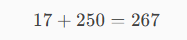
<div id="bkmrk-step-2-%E2%80%94-combine-wit">**Step 2 — Combine with existing stock**</div><div id="bkmrk-total-units-after-re">**Total units after receipt:**</div><div id="bkmrk--5">**![](https://hugeerp10.co.za/hsofmanual/uploads/images/gallery/2026-04/embedded-image-k5siweqn.png)**</div><div id="bkmrk-total-value-after-re">**Total value after receipt:**</div><div id="bkmrk--6">**![](https://hugeerp10.co.za/hsofmanual/uploads/images/gallery/2026-04/embedded-image-luuonhnu.png)**</div><div id="bkmrk-%E2%9C%85-new-weighted-avera">**✅ New weighted average cost:**</div><div id="bkmrk--7">  
</div><div id="bkmrk--8">**![](https://hugeerp10.co.za/hsofmanual/uploads/images/gallery/2026-04/embedded-image-vxpznvxs.png)**</div><div id="bkmrk-rounded-appropriatel">Rounded appropriately:</div><div id="bkmrk-%E2%9E%A1%EF%B8%8F-new-average-cost-">**➡️ New average cost ≈ $1.6406 per unit**</div>---

<div id="bkmrk-%E2%9C%85-3.-now-you-return-">**✅ 3. Now you return the same 250 units at $1.73**</div><div id="bkmrk-important-point%3A">Important point:</div><div id="bkmrk-in-weighted-average-">**In weighted average costing, returns reverse the original receipt at the item's original receipt cost, NOT at the average cost.**</div><div id="bkmrk-so-the-system-remove">So the system removes:</div>- **250 units**
- **Cost per unit for the return = $1.73**

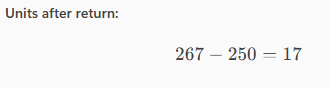
<div id="bkmrk-step-1-%E2%80%94-deduct-the-">**Step 1 — Deduct the units**</div><div id="bkmrk--10">**![](https://hugeerp10.co.za/hsofmanual/uploads/images/gallery/2026-04/embedded-image-tt3zgtem.png)**</div><div id="bkmrk-step-2-%E2%80%94-deduct-the-">**Step 2 — Deduct the value removed**</div><div id="bkmrk--11">**![](https://hugeerp10.co.za/hsofmanual/uploads/images/gallery/2026-04/embedded-image-nzkdf1jv.png)**</div><div id="bkmrk-step-3-%E2%80%94-recalculate">**Step 3 — Recalculate remaining inventory value**</div><div id="bkmrk--12">**![](https://hugeerp10.co.za/hsofmanual/uploads/images/gallery/2026-04/embedded-image-rnzzrdgd.png)**</div>---

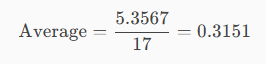
<div id="bkmrk-%E2%9C%85-new-weighted-avera-1">**✅ New weighted average cost after the return**</div><div id="bkmrk--14">**![](https://hugeerp10.co.za/hsofmanual/uploads/images/gallery/2026-04/embedded-image-8irvjzrk.png)**</div><div id="bkmrk-%E2%9C%85-final-answer%3A">**✅ Final Answer:**</div><div id="bkmrk-you-end-up-with%3A">You end up with:</div>- **17 units**
- **Average cost = $0.3151**

<div id="bkmrk-which-is-exactly-the">Which is *exactly the same* as the original cost.</div>---

<div id="bkmrk-%E2%9C%85-why-does-the-avera">**✅ Why does the average cost return to the original value?**</div><div id="bkmrk-because%3A">Because:</div>- The 250‑unit receipt increased the average.
- The 250‑unit return reversed that exact receipt.
- Under weighted average costing, returns must undo the receipt **at the original receipt cost**, not the new average.

<div id="bkmrk-this-leaves-inventor">This leaves inventory **unchanged**, so your cost per unit returns to the original **$0.3151**.</div>---

<div id="bkmrk--17"></div>
#### <span style="text-decoration: underline;">Returning stock at a different cost price</span>

<div id="bkmrk--18">  
</div><div id="bkmrk-what-happens-when-th">What happens when the average price returned is different to the original purchased price</div><div id="bkmrk-great-question-%E2%80%94-thi">Great question — this introduces an important nuance: **under average costing, the value of a return depends on the cost the system uses for returns.**</div><div id="bkmrk-different-erps-behav">Different ERPs behave differently, but the two common methods are:</div>1. **Return at the original receipt cost** (e.g., $1.73)
2. **Return at a user‑entered cost** (your scenario: $1.50)

<div id="bkmrk-i%27ll-show-you-exactl">I'll show you exactly what happens mathematically when the return is at **$1.50**.</div>---

<div id="bkmrk-%E2%9C%85-starting-point-%28af">**✅ Starting Point (after the purchase)**</div><div id="bkmrk-from-the-earlier-cal">From the earlier calculation:</div>- **Inventory before return:**
- Units: 267
- Total value: $437.8567
- Average cost: $1.64061


<div id="bkmrk-now-we-return-250-un">Now we return **250 units @ $1.50**.</div>---

<div id="bkmrk-%E2%9C%85-1.-remove-the-retu">**✅ 1. Remove the returned units**</div><div id="bkmrk--21">**![](https://hugeerp10.co.za/hsofmanual/uploads/images/gallery/2026-04/embedded-image-lqmuovax.png)**</div>---

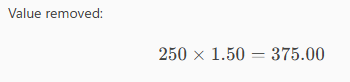
<div id="bkmrk-%E2%9C%85-2.-remove-the-valu">**✅ 2. Remove the value of the return**</div><div id="bkmrk--23">![](https://hugeerp10.co.za/hsofmanual/uploads/images/gallery/2026-04/embedded-image-8tjorcdf.png)</div>---

<div id="bkmrk-%E2%9C%85-3.-new-inventory-v">**✅ 3. New inventory value**</div><div id="bkmrk--25">**![](https://hugeerp10.co.za/hsofmanual/uploads/images/gallery/2026-04/embedded-image-wx3pokw9.png)**</div>---

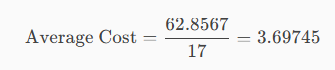
<div id="bkmrk-%E2%9C%85-4.-new-average-cos">**✅ 4. New average cost**</div><div id="bkmrk--27">**![](https://hugeerp10.co.za/hsofmanual/uploads/images/gallery/2026-04/embedded-image-ud61gjgj.png)**</div><div id="bkmrk--28">  
</div><div id="bkmrk-%E2%9C%85-new-average-cost-%E2%89%88">**✅ New average cost ≈ $3.6975 per unit**</div>---

<div id="bkmrk-%E2%9C%85-interpretation">**✅ Interpretation**</div><div id="bkmrk-because-the-return-v">Because the return value ($1.50 per unit) was **lower** than the receipt cost ($1.73), inventory value was reduced **less** than it originally increased.</div><div id="bkmrk-the-result-is-that-t">The result is that the remaining 17 units are now valued much **higher** than before the purchase.</div><div id="bkmrk-this-is-abnormal-in-">This is abnormal in typical average‑cost inventory systems (which normally force returns at the *original receipt cost* to keep the costing accurate), but some systems allow user‑entered return costs.</div>---

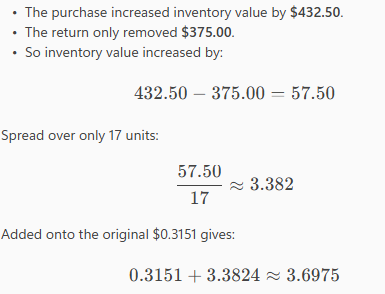
<div id="bkmrk-%E2%9C%85-why-does-the-avera-1">**✅ Why does the average jump so much?**</div><div id="bkmrk-breakdown%3A">Breakdown:</div>- The purchase increased inventory value by **$432.50**.
- The return only removed **$375.00**.
- So inventory value increased by:

<div id="bkmrk-spread-over-only-17-">Spread over only 17 units:</div><div id="bkmrk-added-onto-the-origi">Added onto the original $0.3151 gives:</div><div id="bkmrk--31">![](https://hugeerp10.co.za/hsofmanual/uploads/images/gallery/2026-04/embedded-image-4xlnwxov.png)</div><div id="bkmrk--32">  
</div>---

<div id="bkmrk-%E2%9C%85-summary-of-outcome">**✅ Summary of outcomes**</div><div id="bkmrk-event-units-total-va"><table><tbody><tr><th><div>Event</div></th><th><div>Units</div></th><th><div>Total Value</div></th><th><div>Average Cost</div></th></tr><tr><td><div>Starting</div></td><td><div>17</div></td><td><div>5.3567</div></td><td><div>0.3151</div></td></tr><tr><td><div>After purchase</div></td><td><div>267</div></td><td><div>437.8567</div></td><td><div>1.6406</div></td></tr><tr><td><div>After return @ $1.50</div></td><td><div>17</div></td><td><div>62.8567</div></td><td><div>**3.6975**</div></td></tr></tbody></table>

</div>---

#### Examples of processing stock with RTS

##### Example 1

GRV stock quantity and cost, then returning RTS stock quantity and cost the same

[![image.png](https://hugeerp10.co.za/hsofmanual/uploads/images/gallery/2026-04/scaled-1680-/MaDimage.png)](https://hugeerp10.co.za/hsofmanual/uploads/images/gallery/2026-04/MaDimage.png)

##### Example 2

GRV stock quantity and cost, then returning RTS stock quantity same but different cost price

[![image.png](https://hugeerp10.co.za/hsofmanual/uploads/images/gallery/2026-04/scaled-1680-/oE1image.png)](https://hugeerp10.co.za/hsofmanual/uploads/images/gallery/2026-04/oE1image.png)

##### Example 3

GRV stock quantity and cost, then returning RTS stock quantity (All stock on hand) and different cost price

[![image.png](https://hugeerp10.co.za/hsofmanual/uploads/images/gallery/2026-04/scaled-1680-/Uh5image.png)](https://hugeerp10.co.za/hsofmanual/uploads/images/gallery/2026-04/Uh5image.png)